
Soft/Angle Foot
When performing shaft alignments procedures, be sure to account for soft or angle foot possibilities; that is, where one machine foot does not sit correctly on its base plate.
Services Technique Claude Drouin

When performing shaft alignments procedures, be sure to account for soft or angle foot possibilities; that is, where one machine foot does not sit correctly on its base plate.

In order to avoid any repeatability issues when performing an alignment, be sure to clean the targets on your laser heads. This can be done with a Q-tip and alcohol. This would be due to a simple principal called refraction, if the laser beam goes through water or dirt it will change direction.

Do you know the principles of refraction? By definition, refraction is a phenomenon of deviation off a wave of light, when its speed changes between two centers, for example between air and water.
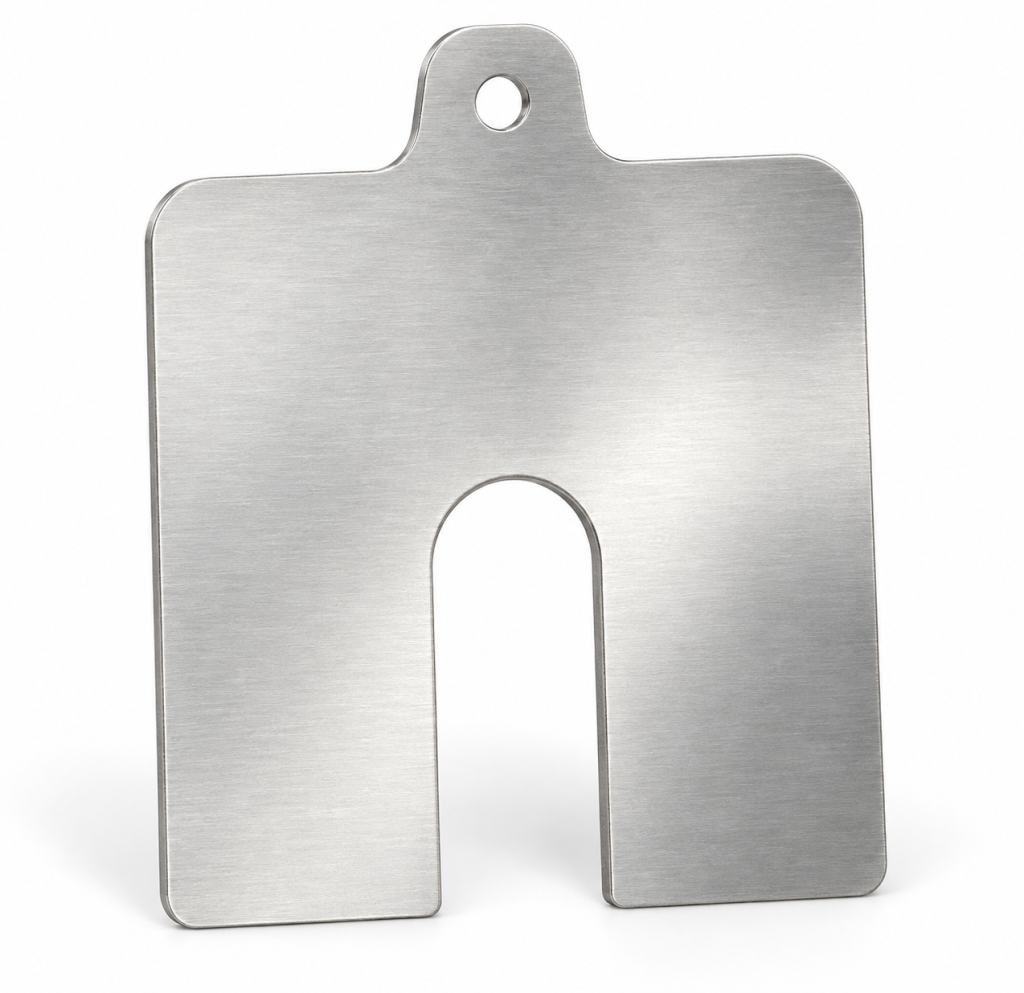
Always use high quality, clean and uniform shims when shimming is needed. They should be free from burrs, nicks, rust or deformations of any kind. Be sure to also check for their thickness accuracy. Don’t forget the rule; no more than 3 shims under each foot.

Always be sure you have a solid, rigid and clean foundation prior to the alignment process. Check for potential defects on the foundation or machine frame that could otherwise alter successful alignment results.

A lot of people still believe that they cannot use their laser alignment system when they are confronted to a non-rotating application, well they are mistaken. For more than 10 years now you can have brackets designed especially for non-rotating application. It is simply a matter of have the right tool for the alignment you …

Do not forget that when mounting your heads on the shaft, if there is a lack of space, the heads can also be mounted onto the coupling given that it is the fixed part of the coupling as it would still be representative of the axis of rotation. You can also ask your laser alignment …

Are you making more corrections than expected? This may be a consequence of incorrect dimensions input in your system. It is crucial to take the distances with the most precision possible; those distances will affect all the calculations thus the corrections. Don’t forget that the same principle apply when you are doing an alignment with …

One of the most overlooked steps while performing an alignment is the verification of the ‘E’ distance, better known as the coupling gap (between the movable and stationary hub). Too often this verification is not done after an alignment which can cause very bad surprise after the equipment’s start-up. This distance is a vital part …

One of the biggest challenge in mills causing headache and loss of time during laser alignment procedure is still coupling backlash. Certain type of couplings are designed to have backlash after installation. This infamous backlash is more than often the main cause of false measurements and repeatability issues during laser alignment correction step, thus causing …